
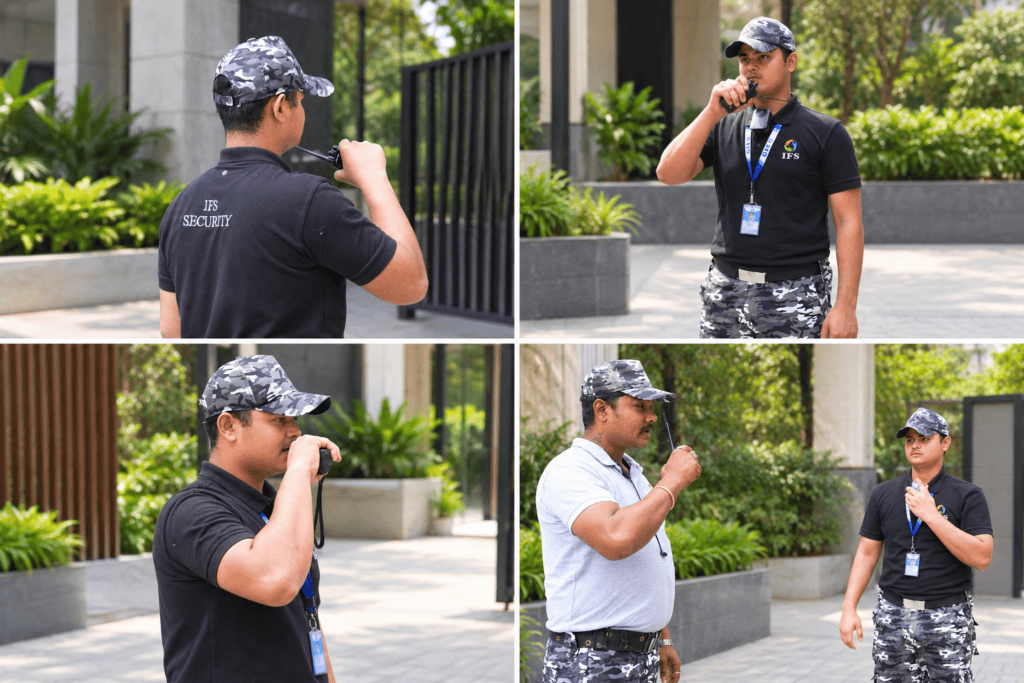
The Importance of Daily Security Briefings Before Every Shift
Daily security briefings are essential for maintaining organized security operations. They help security guards understand their duties, review site-specific risks, communicate important updates, and prepare for emergencies. IFS Services Pvt. Ltd. emphasizes professional communication and disciplined teamwork to support reliable security services.
Daily security briefings help security teams prepare for their shifts, share important updates, and understand the tasks required to maintain a safe and controlled environment.
Why Daily Security Briefings Matter for Security Teams?
A daily security briefing is a short meeting conducted before a security shift begins. During this meeting, security supervisors communicate essential instructions, review recent incidents, explain duty allocations, and highlight any changes affecting the site.
Briefings can be conducted at apartment complexes, office buildings, commercial facilities, warehouses, and other locations where security personnel are deployed.
For information on police services and public safety, visit the Karnataka State Police official website.
The objective is to ensure that every guard understands the day’s priorities and knows how to report concerns to the appropriate supervisor.
1. Improve Communication Among Security Personnel
Clear communication helps security teams coordinate their activities and avoid confusion during duty hours. A briefing gives supervisors an opportunity to communicate instructions directly to guards before they take their assigned positions.
Important updates may include changes to visitor entry procedures, restricted areas, delivery schedules, emergency contacts, and site-specific instructions.
When everyone receives consistent information, the team can follow established procedures more effectively and provide a more organized security service.
2. Review Security Risks and Recent Incidents
Security requirements can change from one day to another. A recent access control issue, an unfamiliar visitor, a damaged gate, or a malfunctioning security device may require additional attention.
During daily security briefings, supervisors can explain relevant incidents, identify potential risks, and remind personnel of the appropriate reporting procedures.
This helps guards remain alert to site-specific concerns and understand when an issue should be escalated to management.
3. Clarify Duties and Responsibilities
Every security post has different responsibilities. A main gate guard may manage visitor verification, while a patrol guard monitors designated areas. Other personnel may be responsible for parking management, access control, or monitoring security equipment.
A briefing helps supervisors allocate duties clearly and explain the responsibilities of each team member.
Clear duty allocation reduces misunderstandings and helps maintain consistent coverage across the property throughout the shift.
4. Strengthen Emergency Preparedness
Security personnel should understand how to communicate and respond when an emergency occurs. Daily briefings provide an opportunity to review emergency contacts, evacuation routes, reporting procedures, and the location of relevant safety equipment.
Supervisors can also remind guards to report fire hazards, suspicious activity, medical emergencies, and other safety concerns promptly.
Briefings support preparedness, but they should complement formal training, established emergency plans, and regular practice exercises.
5. Maintain Professional Discipline and Standards
Professional security services require punctuality, proper uniform standards, respectful communication, alertness, and responsible conduct.
Supervisors can use pre-shift briefings to reinforce these expectations and address operational concerns. They can also remind personnel about accurate recordkeeping, confidentiality, visitor management, and the correct use of communication equipment.
Consistent instructions help security teams understand the standards expected at their assigned locations.
6. Support Effective Shift Handover
A smooth shift handover helps ensure that important information is not lost when one team finishes duty and another takes over.
Outgoing guards should communicate pending issues, equipment problems, relevant incidents, visitor or vehicle matters requiring follow-up, and any special instructions. Incoming guards should confirm that they understand these updates before assuming responsibility.
Combining clear handover records with daily briefings helps maintain continuity across security shifts.
How IFS Services Pvt. Ltd. Supports Professional Security Operations
IFS Services Pvt. Ltd. understands the importance of communication, discipline, supervision, and coordinated teamwork in security operations. Our approach emphasizes clear instructions, responsible conduct, and awareness of site-specific requirements.
Daily briefings can help security personnel understand their assignments, follow established procedures, and communicate important information to supervisors. These practices are especially useful for residential communities, corporate offices, and commercial properties that require organized security coverage.
Conclusion
Daily security briefings are a practical way to improve communication, clarify responsibilities, review risks, and prepare security personnel for their duties. When supported by proper training, supervision, and documented procedures, they can contribute to more consistent and organized security operations.
Looking for professional security services for your property or business? Contact IFS Services Pvt. Ltd. today to discuss your security requirements and discover a solution tailored to your needs.
Your Safety, Our Priority.